Serving North Toronto, East York & Midtown Toronto. Proudly Canadian!


Toronto 2026 Deck Price Guide (PT vs Cedar vs Composite vs PVC)
If you’re trying to budget a new deck in Toronto, the internet will either lowball you or scare you. ChatGPT isn’t much better. So I’m going to give you numbers I actually see in the GTA, based on a real “average” project.
Assumptions (so we’re talking about the same thing):
- About 300 sq ft of deck surface
- Railings and a set of stairs included
- Full demolition and disposal of an existing deck
- Picture-framed decking for a finished look (yes, it costs more, and yes, it looks better)
- Your design will vary, and that’s what moves the needle
Before we get into materials, one quick Toronto reality check: if your deck is more than 60 cm (24 in) above grade, the City of Toronto says you’re in permit territory. If it’s not more than 60 cm and it’s an uncovered platform, you may be exempt, but zoning still applies.
Also, as of January 12, 2026, Toronto wants deck/porch permits submitted through their online portal.
Permits aren’t the biggest cost, but the drawings, surveys, and timelines can change your whole plan.
How Much Does a Deck Cost in Toronto in 2026?
On a 300 sq ft deck (with railings + stairs + demo), here’s where pricing typically lands:
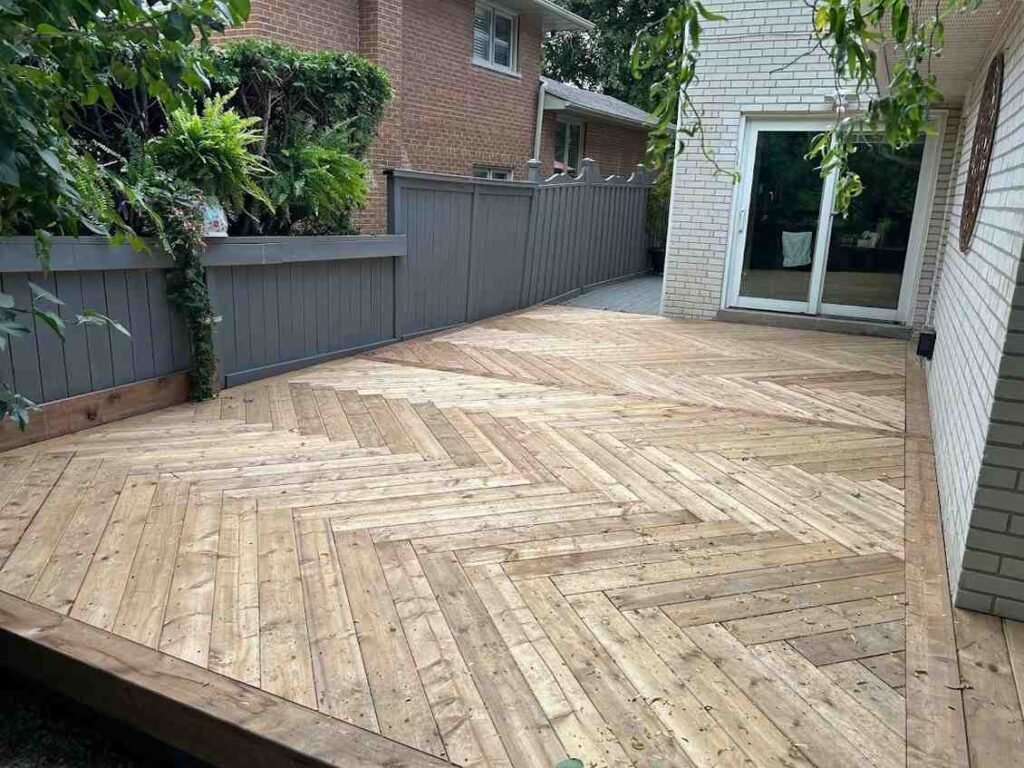
- Pressure-treated wood (PT): starts around $60/sq ft (about $18,000)
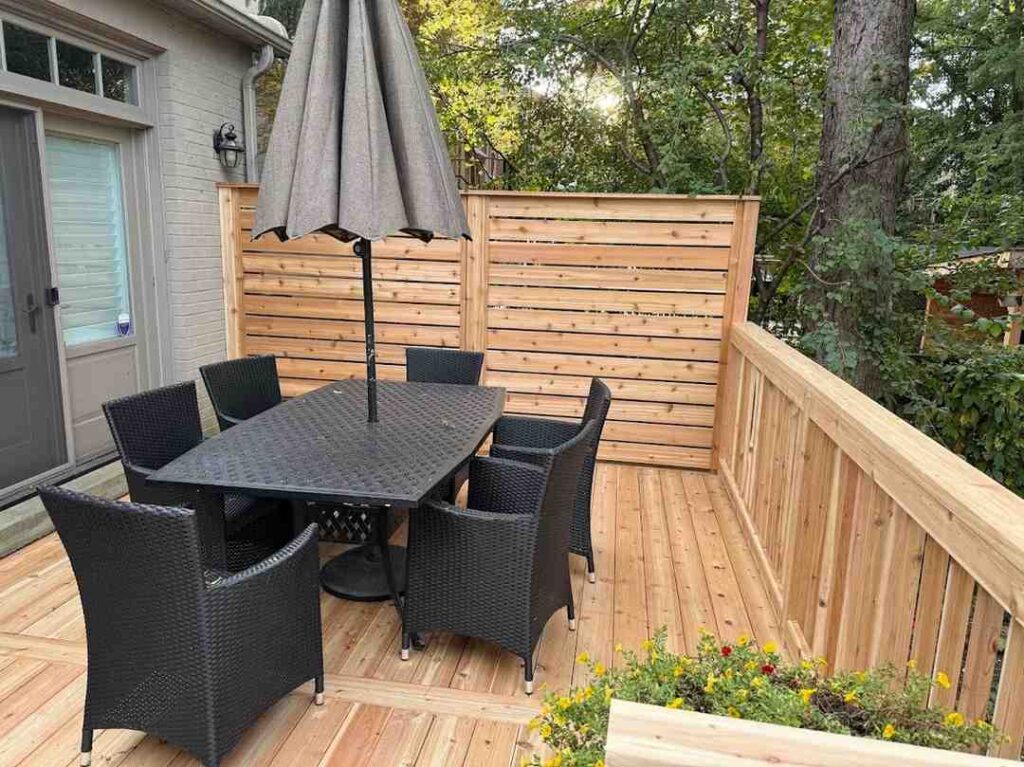
- Cedar decking (knotty Western Red Cedar): around $70/sq ft (about $21,000)
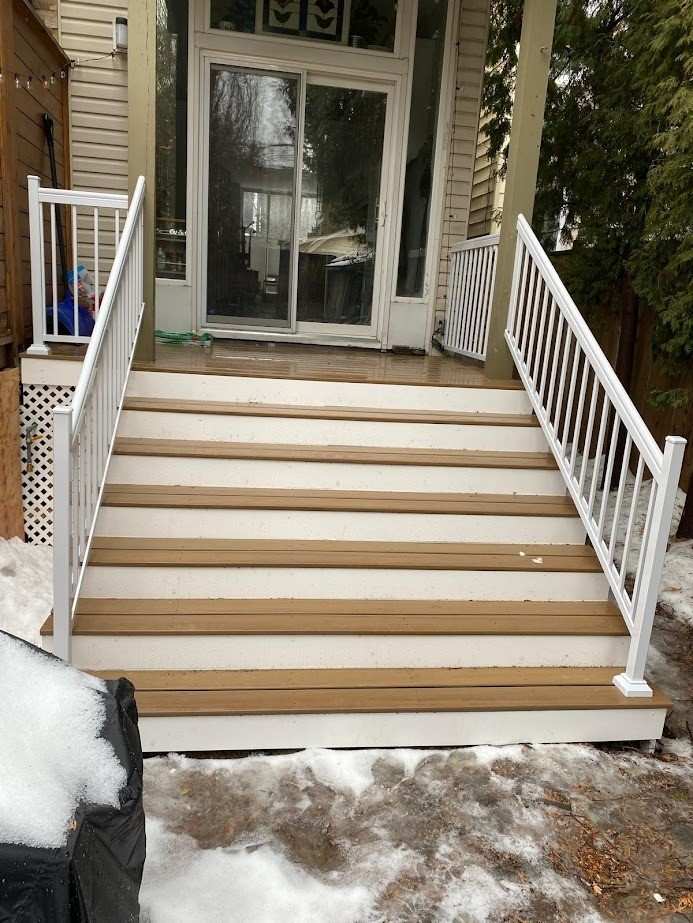
- Composite (mid-high tier): starts around $80/sq ft (about $24,000)
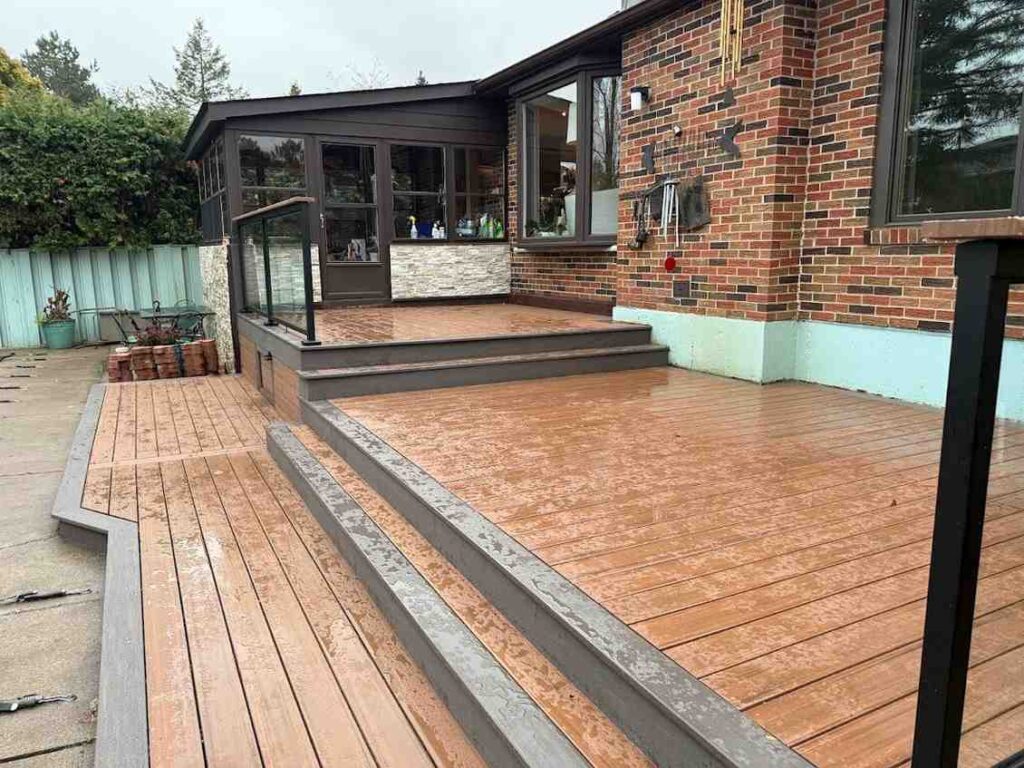
- Luxury PVC: starts around $105/sq ft (about $31,500)
Those are ;starting points. The exact footprint, stairs, railing style, height, and access to the yard can push things up fast in Forest Hill, Lawrence Park, and parts of Rosedale where we have to work around ravine regulations put forth by the TRCA.
Why PT Is the Budget Choice, and Why It’s Still a Good Choice
PT is what I recommend when you want to replace a rotting deck and you’re watching the budget. It works. It’s proven. We also know it has a limited lifespan and your deck will be noticeably worse after a few years without regular maintenance.
But here’s what you’re signing up for:
- You will have to maintain it if you want it to look decent.
- You will see checking, splinters, and warping over time.
- You’re probably replacing boards or rebuilding in 15 to 20 years depending on sun exposure and drainage.
If you’re closer to downtown Toronto or in East York on a tight footprint and the deck is basically a “back door landing plus stairs,” PT can be the right call. Just don’t pretend it’s a forever deck. There is nothing wrong with a PT if you are going in eyes open.
Cedar Costs More Because the Wood Costs More
Cedar decks are built similarly to PT decks. The big driver is simple: cedar boards cost a lot more than PT. Prices for cedar boards can be more than double that of PT.
We use knotty Western Red Cedar when we do cedar builds. It gives you that classic look and smell, and it feels great underfoot. But it still needs care. If you ignore it, it will weather. Some people like the silvery grey patina that an aged cedar deck will show.
Cedar is a good middle ground when you want a look that is (in my opinion) nicer than PT, but you don’t want to invest in composite or PVC. They also smell like a sauna everytime it rains.
Composite Is the “Buy Once, Cry Once” Option
If you want your deck to look basically the same 10 years from now, composite is where the conversation gets serious.
Here’s how the math breaks down: if you’re going to professionally maintain a wood deck every 2 to 3 years, the ongoing cost and hassle adds up. Composite often wins somewhere around the 8 to 12 year mark, depending on what you were spending on sanding, staining, and repairs.
We like composite when the client wants:
- 25 years of solid looks
- No summer weekend lost to maintenance
- A consistent finish, even in full sun
Brands matter here. There’s a big difference between “builder grade” composite and the stuff that holds colour and texture. Trex and TimberTech and TruNoth all have good options. I pick the line based on the site, the sun, and how picky you are about heat and scratching.
Luxury Pvc Is the Top Shelf for a Reason
PVC is the highest-end choice, and it behaves like it.
You pick PVC when you want:
- A very specific look and colour range (this is where TimberTech PVC lines shine)
- A board that stays stable and clean
- The best barefoot feel and grip
- The longest “new deck” look, its lasts decades, not seasons
In open, sunny North York lots, PVC is often worth it because standard pressure-treated boards can bake, dry out, and get ugly fast. PVC takes that beating better than any other material.
The Stuff That Actually Changes the Price
If you end up calling me and ask for a price on your project I will always give you a range of prices. Homeowner’s always ask me “why the range”. Here’s why:
Do you have railings, and what kind?
Railings can swing pricing more than most people expect. And it’s not optional once you hit the height threshold. Guards are required when there’s more than 600 mm (24in) difference in elevation, and openings generally can’t allow a 100 mm (4in) sphere to pass through.
Glass costs. Aluminum costs. Custom wood costs.
How many stairs, turns, and landings?
Straight stairs are one thing. Wraparound stairs with landings are another. Every turn is framing, structure, and finishing time.
Board pattern, picture framing, and “details you notice”
Diagonal patterns, inlays, breaker boards, and picture framing all add labor and waste. They’re also the difference between a deck that looks “done” and a deck that looks like a platform.
Less common (but still frustrating) additional costs
- Utilities: Gas line, hydro, telecom, irrigation, old conduit. If a footing or helical pile lands on top of it, the plan changes.
- Moving gas lines or plumbing vents: BBQ gas feeds, dryer vents, sump discharge, AC lines, hose bibs. These get in the way of stairs, beams, and posts.
- Regrading and drainage fixes: A deck that sits over a swampy low spot won’t stay nice for very long. Sometimes the yard needs grading, drain work, or a proper landing pad for stairs to protect your investment.
- Access to the site: Narrow side yards, shared driveways, no lane access, finished landscaping you want to keep intact, having to bring materials through the house. All of these add time and cost to your build.
- Uncovered rot: Sometimes we take down an old deck only to discover that the house it is attached to has rotted over the years. When this happens we have to take the time to fix the damage and make sure it doesn’t happen again.
How Do I Figure Out What My Deck Will Cost in Toronto?
Give me a call! I am always happy to help out. To give you the best estimate possible I need some phots and accurate measurements.